

Your Complete Guide to PDO Thread Lift Recovery & Downtime

Mary's Profile

A plainspoken walkthrough of what happens after a PDO thread lift, the downtime you can plan around, and the collagen response that keeps working in the background long after the appointment ends, from the aesthetics team at Boutique Wellness in Winston-Salem, North Carolina.

Most patients book a thread lift because it lifts the lower face without the recovery arc of surgery. The tradeoff is that “minimal downtime” is not the same as no downtime. The threads sit under your skin, the tissue around them responds, and the choices you make in the following weeks either help that process along or work against it. This guide walks through what your face is doing in the first twenty-four hours, what the first week looks like in practice, and the longer stretch where the biological work continues under the surface.
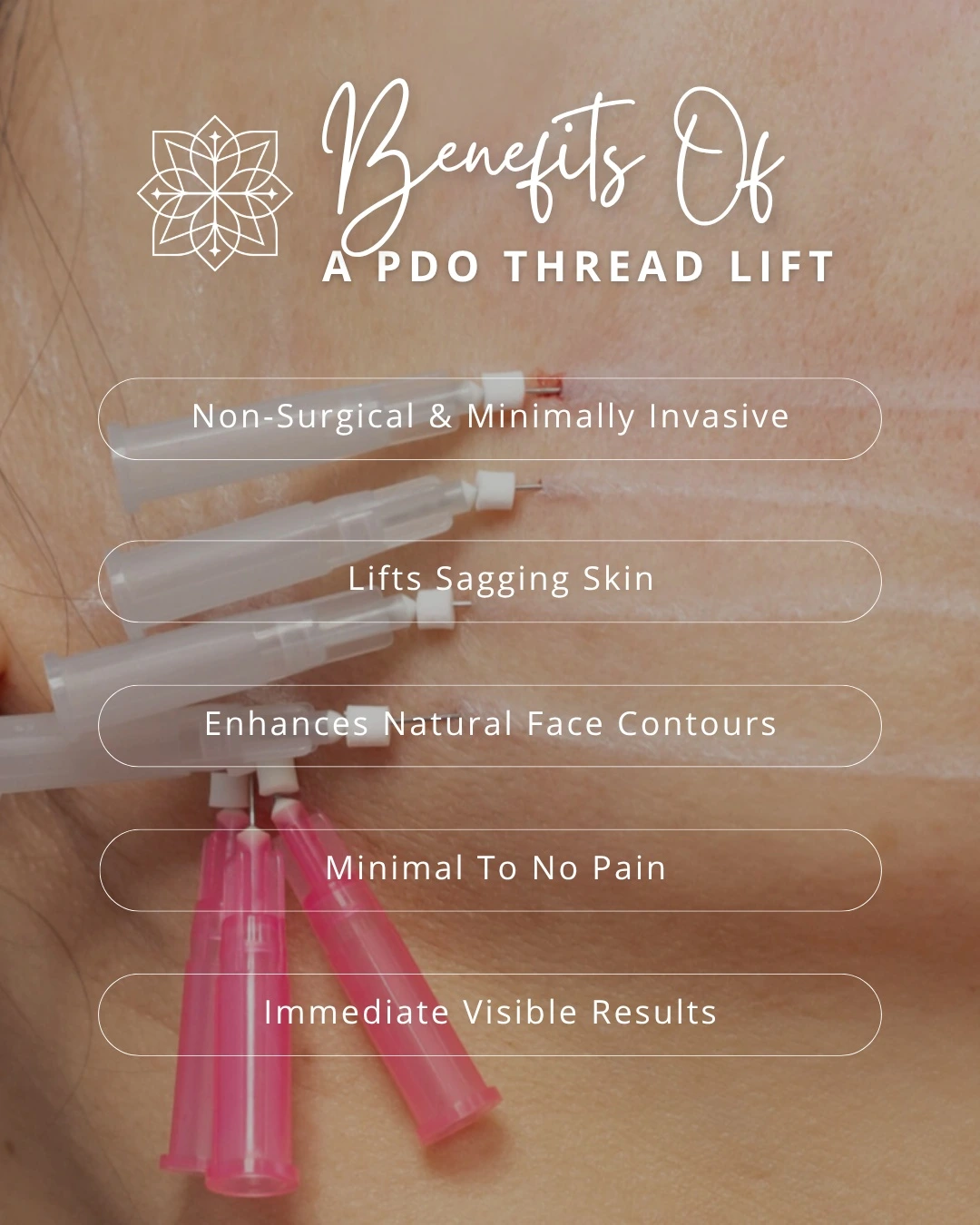
PDO (Polydioxanone) threads benefits

What happens under your skin during recovery?

The PDO thread lift in Winston-Salem uses polydioxanone threads, a medical-grade suture material that has been used in cardiac surgery for decades. Once placed, the threads do two jobs at once. The barbs or cones on the thread grip the tissue and reposition it upward, which is the instant lift you notice in the mirror on the day of treatment. Underneath that mechanical effect, the body reads the threads as a controlled stimulus and begins laying down new collagen along the path of each thread.

This dual mechanism explains the shape of the recovery. The lift is visible immediately. The threads themselves are absorbed by the body over four to nine months through hydrolysis, a quiet chemical process. What outlasts the material is the collagen scaffolding your body builds around them, which is where the longer-term firmness comes from. That biology also explains why aftercare matters. Anything that disturbs the threads before they settle, or that inflames the surrounding tissue unnecessarily, has a direct effect on how cleanly your face heals.

What to expect in the first 24 hours?

The first day is when the tissue is most reactive and when a small handful of habits prevent most of the swelling and bruising that patients worry about. Expect mild swelling and tenderness across the treated area. Some tightness and a pulling sensation, particularly when you smile or open your mouth wide, is normal and settles quickly. Pinpoint bruising at the insertion sites is common, though many patients see none.

Keep your face calm for the rest of the day. Skip the animated dinner conversation and the extended phone catch-up. Every big smile, wide yawn, and exaggerated expression pulls on threads that have not yet been anchored by the surrounding tissue.

Sleep on your back with your head elevated on an extra pillow. Face-down or side sleeping in the first several nights can shift threads that have not fully integrated, and the elevation itself limits swelling around the eyes and cheeks. This is the single adjustment most patients underestimate before treatment.

Cool the area gently if you need to. A cool compress wrapped in a soft cloth, held lightly against the skin, eases the swelling in the first hours. Wrap anything cold in fabric, never apply ice directly, and keep the pressure feather-light. The goal is temperature, not compression.

The first week after treatment?

Once you are past the first day, the rules relax somewhat, though the main downtime window is still active. Most patients look presentable enough for work within one to three days, with residual swelling that continues to soften across the week. If you have events on the calendar within the first ten days after treatment, that is worth mentioning during your consultation so timing can be adjusted.

The single most useful piece of practical advice for the first week is to move less than you think you need to. Elevated blood flow from exercise, saunas, and hot showers all increase swelling. Bending forward, whether for yoga, gardening, or picking something up off the floor, sends blood to the face and prolongs the puffiness. Most patients find that a quiet week produces a noticeably cleaner recovery.

The table below covers the phases of recovery in order, so you can plan your calendar around what your skin is actually doing at each point.

Phase

Typical Duration

What You Will Notice

What to Do

Immediate

First 24 hours

Tightness, mild swelling, occasional pinpoint bruising, possible pulling sensation with expression

Head elevated, minimal facial movement, cool compress if needed

Early recovery

Days 2 to 5

Swelling peaks around day 2 or 3, then softens. Occasional dimpling at insertion points

Sleep on your back, avoid strenuous activity, eat soft foods

Social recovery

Days 5 to 10

Most visible swelling and bruising resolves. Face begins to feel like your own again

Resume gentle skincare, light walks are fine, no aggressive workouts

Tissue settling

Weeks 2 to 4

Any dimpling smooths out. Lift begins to look natural rather than pulled

Return to normal exercise carefully, resume most skincare

Collagen build

Months 1 to 6

Firmness continues to improve as new collagen develops

Maintenance skincare, sun protection, follow-up as scheduled

Phase Typical Duration What You Will Notice What to Do
Immediate First 24 hours Tightness, mild swelling, occasional pinpoint bruising, possible pulling sensation with expression Head elevated, minimal facial movement, cool compress if needed
Early recovery Days 2 to 5 Swelling peaks around day 2 or 3, then softens. Occasional dimpling at insertion points Sleep on your back, avoid strenuous activity, eat soft foods
Social recovery Days 5 to 10 Most visible swelling and bruising resolves. Face begins to feel like your own again Resume gentle skincare, light walks are fine, no aggressive workouts
Tissue settling Weeks 2 to 4 Any dimpling smooths out. Lift begins to look natural rather than pulled Return to normal exercise carefully, resume most skincare
Collagen build Months 1 to 6 Firmness continues to improve as new collagen develops Maintenance skincare, sun protection, follow-up as scheduled

Beyond timing, a few skincare habits are worth pausing during the first week. Retinoids, exfoliating acids, and any active ingredient that causes tingling or peeling can add unnecessary irritation to skin that is still calming down. A mild cleanser and a bland moisturizer are all your face needs for the first several days. Actives can be reintroduced once your provider clears you, usually around the two-week mark. Facials, chemical peels, microneedling, and aggressive massage should wait several weeks. If gentle skin maintenance is part of your longer plan, our HydraFacial in Winston-Salem is often a comfortable next step once the tissue has settled.

What about weeks two through four?

The second and third weeks are where most patients start to feel like themselves again. Residual swelling has largely resolved, any bruising has cleared, and the tissue around the threads is quietly integrating. Some patients notice a very mild pulling sensation when they smile widely or open their mouth to yawn. That sensation usually softens by the end of the first month as the threads settle into their position.

Occasionally patients see small dimples or slight puckering at insertion points during this window. In most cases these smooth out on their own as swelling resolves and the tissue relaxes. Persistent dimpling that has not softened by the end of the second week is worth a quick follow-up so your provider can assess and, if needed, address it during an in-office visit.

A short list of signs worth calling us about:

  • Redness, swelling, or tenderness that is worsening after several days rather than improving, or any spreading warmth that could suggest infection.
  • Persistent visible thread poking through the skin, or a dimple that has not softened after two weeks of normal healing.

The collagen response that develops over months?

The recovery visible in the mirror during the first month is only part of the story. The longer stretch, from month one to month six and beyond, is where the biological work happens. Your body reads the placed threads as a controlled stimulus and produces new collagen along the path of each thread. That collagen matrix is what keeps the skin firmer even after the threads themselves are fully absorbed.

Published research places the common recovery features in perspective. A 2025 meta-analysis of thread lifting reported swelling in about 34% of cases and ecchymoses (bruising) in about 26%, with most cases resolving without intervention (Source: medRxiv meta-analysis of thread lifting complications, 2025). Both are largely preventable with careful pre-care around blood thinners, alcohol, and supplements like fish oil and vitamin E.

Because the collagen response is gradual, patients who judge their result too early sometimes conclude that the lift underperformed. The appearance a week after treatment is not the appearance three months out. Skin that looked slightly swollen or uneven in the early weeks usually reads as smoother, firmer, and more supported once the tissue has fully integrated and the new collagen has been laid down.

A note on sleep position. The single habit that helps recovery most, and the one patients most often forget, is sleeping on your back for the first week to ten days. Side sleeping and face-down sleeping can shift threads that have not yet been anchored by surrounding tissue. If back sleeping is difficult for that long, a travel neck pillow or a wedge pillow keeps the face off the mattress without much effort.

What activities should I skip, and for how long?

Strenuous exercise, saunas, hot yoga, and hot tubs should wait about one week. Heat and elevated blood flow both increase swelling and can encourage bruising to spread. Light walking is fine from the day after treatment. Anything that raises your heart rate significantly or produces heavy sweat is worth deferring.

Alcohol and unnecessary blood thinners should wait forty-eight to seventy-two hours. Aspirin, ibuprofen, naproxen, fish oil, vitamin E, and a few herbal supplements such as ginkgo and St. John’s wort all thin the blood and increase the likelihood of bruising. If you take any of these for a documented medical reason, keep your provider informed rather than stopping them without discussion.

Dental work should be deferred for about two weeks. Extended jaw opening during a dental appointment tugs on the same tissue the threads are anchored to, and the pressure can shift threads before they have settled. If a dental procedure is on the calendar, mention it during your consultation so timing can be coordinated.

Facials, aggressive skincare, and any massage of the treated area should wait a minimum of two weeks. Deep tissue massage, mask removal that pulls at the skin, and vigorous cleansing all move the surface tissue in ways that can disturb thread placement. Air travel is worth avoiding in the first several days if possible, mostly because cabin pressure changes can prolong facial swelling.

How can I recover faster and get a better result?

A handful of small choices meaningfully improve how cleanly your face heals. Most cost nothing and require no special products. Stay well hydrated in the days before and after treatment. Tissue that is well hydrated responds better to the collagen stimulus and clears swelling faster. Arnica supplementation, taken orally or applied topically, helps some patients with bruising. Starting a few days before treatment and continuing for several days after is the usual pattern, and your provider can advise on whether it makes sense for you.

Eat soft foods for the first day or two if the treatment area includes the jaw or lower face. Aggressive chewing of tough or crunchy food pulls on the same tissue the threads are anchored to. Soups, soft pastas, and yogurt are easier on the recovery than steak and crusty bread during the first days. Protect the treated area from the sun as well. Ultraviolet exposure during the healing window can prolong redness and affect how evenly the skin recovers.

Common recovery mistakes that cost results?

A few behaviors quietly undermine an otherwise clean recovery. The most common is treating the day of the appointment as if nothing happened. Heading straight to a workout class, having drinks at dinner, or falling asleep face-down all fall into the category of ordinary habits that happen to work against a fresh treatment. A single low-key evening protects the result more than most patients expect.

Another is impatience with the timeline. Patients who expect a finished result during the first week sometimes conclude the treatment did not deliver, when in reality any residual swelling is still resolving and the collagen response has barely begun. PDO threads reward patients who give the process weeks rather than days. Combining aggressive treatments too soon is another quiet mistake. Layering a chemical peel or an ablative laser over freshly placed threads adds inflammation to tissue that is already healing and can affect thread placement.

How PDO threads fit into a broader plan?

PDO threads address mild to moderate laxity and lift tissue that gravity has begun to pull downward. They do less for volume loss, deep etched lines at rest, or surface pigmentation. Patients who see the most complete transformations often layer thread lifts with treatments that address these other layers. In practice, that often means pairing threads with dermal filler in Winston-Salem to restore lost volume in the cheeks and temples, where the scaffolding the lift is anchored to has thinned with age. Some patients prefer a regenerative approach and combine threads with our EZ Gel PRF treatment in Winston-Salem or plasma gel in Winston-Salem, both of which restore volume using the patient’s own biology. For surface concerns like uneven texture and pigmentation, NOUVADerm laser resurfacing in Winston-Salem is often sequenced after the threads have fully settled. For readers considering their first injectable procedure alongside threads, our first-timer’s guide to injections covers what to expect at that appointment in detail.

Frequently asked questions

Most patients look presentable within three to five days, with residual swelling that softens across the first week and any bruising that fades within seven to ten days. The tissue continues to settle for several weeks after the visible recovery is complete. Patients with events on the calendar within two weeks of their planned appointment should mention the timing during consultation.

Most patients return to a desk job within one to three days. If your work involves heavy lifting, extended sun exposure, or animated public speaking, an extra day or two of downtime is worth planning for.

Sleeping on your back with an elevated head is recommended for the first week to ten days. After that, side sleeping is usually fine, though many patients find that back sleeping through the first two weeks produces a cleaner result.

Bruising is not universal. Many patients see none, and those who do usually see a small bruise at one or two insertion sites that fades within a week. Following the pre-care guidance around blood thinners, alcohol, and supplements meaningfully reduces the likelihood.

A mild pulling sensation during wide expressions is normal during the first month as the tissue integrates around the threads. It usually softens as the recovery progresses. Persistent discomfort or asymmetry that has not resolved by the end of the second week is worth a follow-up visit so your provider can assess and adjust if needed.

Yes, and many patients do. Threads pair particularly well with filler, biostimulators, and regenerative treatments like PRP in Winston-Salem. Timing between procedures is coordinated so recoveries do not overlap in a way that undercuts either result. Your provider will build the sequence around what you are treating.

The mechanical lift from the threads themselves is visible immediately and holds while the threads remain in place, typically four to nine months. The collagen scaffolding your body builds around them continues to hold structural benefit beyond that window, with most patients seeing results that last twelve to eighteen months overall. Maintenance sessions extend the effect over time.

Why patients across the Piedmont Triad choose Boutique Wellness?

Recovery is only half of a good outcome. The other half is the plan built around your face during the consultation, and the provider who places every thread with attention to your anatomy, your goals, and the realistic timeline for getting there. Aftercare protects what a thoughtful placement sets in motion.

Our team brings decades of combined experience in aesthetics and regenerative medicine to every consultation. We do not apply templates. Every thread lift at Boutique Wellness is designed around the face in front of us, and every patient leaves with aftercare instructions tailored to what was treated. If a different treatment would serve your concern better than PDO threads, we will say so directly. Honest assessments are the foundation of every long-term outcome we are proud of.

We serve patients throughout Winston-Salem, Greensboro, High Point, Kernersville, Clemmons, and the surrounding communities of North Carolina. Our clinic is at 848 W 5th Street, Suite 201, in Winston-Salem. For readers ready to book, our current 30% off PDO thread lift special is available to new and returning patients.


References

  1. Chen, Y., et al. (2025). A meta-analysis of complications of thread lifting. medRxiv. Available at: https://www.medrxiv.org/content/10.1101/2025.03.10.25323087v1.full
  2. Kaiser, M., et al. (2025). Is More Always Better? A Randomized Comparative Clinical Trial About the Impact of Polydioxanone Threads Quantity for Facial Lifting. Aesthetic Surgery Journal Open Forum. Available at: https://www.ncbi.nlm.nih.gov/pmc/articles/PMC11997779/
  3. Kang, S. H., et al. (2019). Complication After PDO Threads Lift. Aesthetic Plastic Surgery. Available at: https://pubmed.ncbi.nlm.nih.gov/31299818/
Facebook
Twitter
LinkedIn
Pinterest
Email