

Two neuromodulators, one active molecule, measurable differences. A breakdown from the aesthetics team at Boutique Wellness in Winston-Salem, North Carolina.
The American Society of Plastic Surgeons logs more neuromodulator injections each year than any other minimally invasive procedure in the country. Botox has become shorthand for the entire category, in the way that Kleenex stands in for tissue and Xerox once stood in for the copy machine. Ask ten patients what they got last month, and a fair number who said “Botox” actually received Dysport, Xeomin, or one of the newer entrants.
That linguistic shorthand matters less at the cocktail party than it does in the treatment room. Botox and Dysport share a parent molecule, botulinum toxin type A, and they produce results that, to the untrained eye, look nearly identical. Under the skin, they behave differently. The differences are subtle, they are measurable, and in the hands of an experienced injector they are the reason one product is selected over the other for a specific face and a specific goal.
This is the comparison our team at Boutique Wellness walks patients through every week. No brand loyalty dressed up as clinical advice. Just what the evidence says, what we see in practice across the Piedmont Triad, and how to decide which of the two belongs on your face.
Same family, different personalities
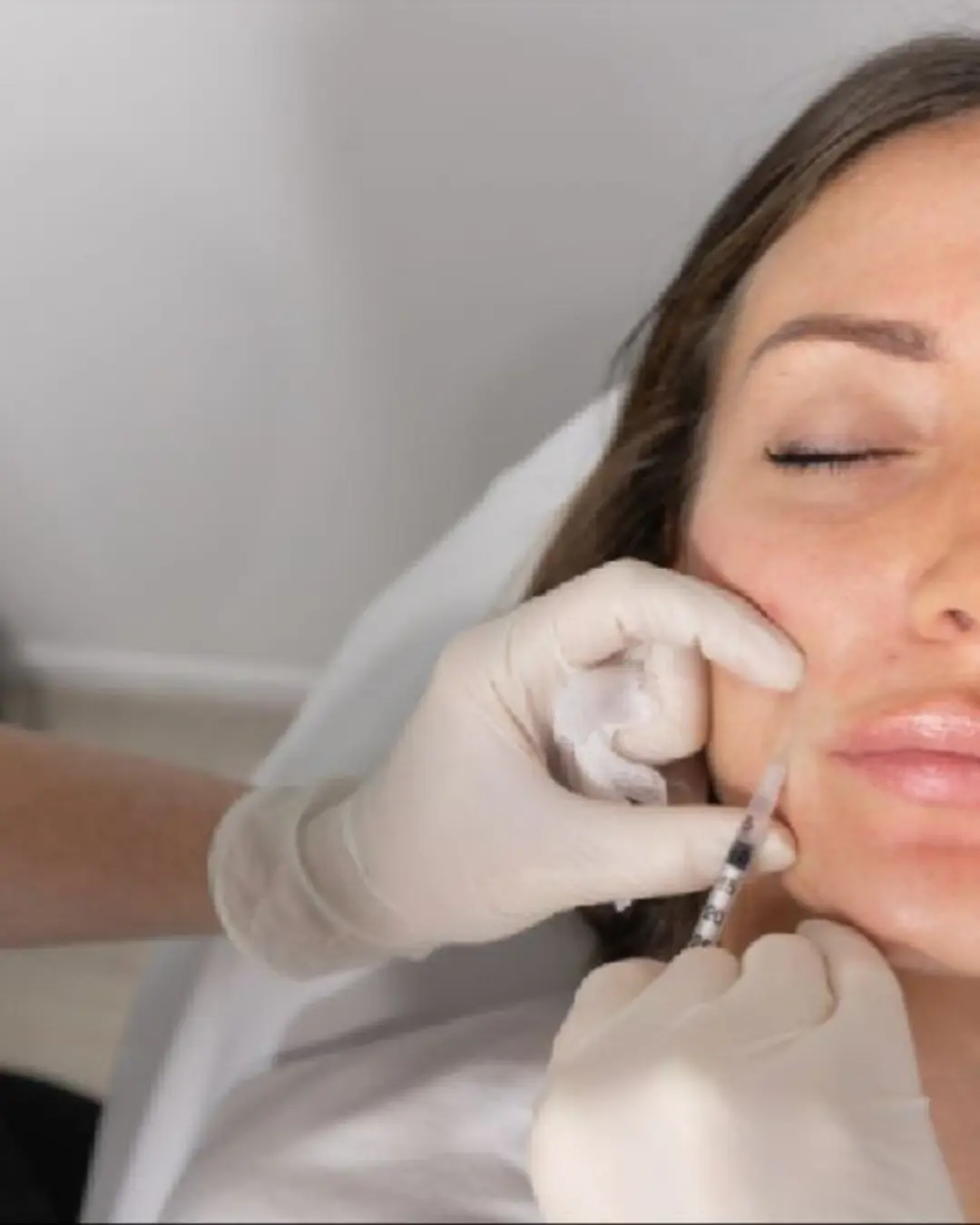
Both products are purified preparations of botulinum toxin type A, the neurotoxin produced by Clostridium botulinum. Both block acetylcholine release at the neuromuscular junction, which is the biochemical equivalent of cutting the wire between a nerve and the muscle it controls. When the signal cannot cross, the muscle cannot contract. Dynamic wrinkles, the ones created by repeated expression rather than volume loss, soften and then fade.
What separates the two products is the architecture around that shared core. Botox, manufactured by Allergan (now part of AbbVie), carries a larger complex of accessory proteins that surround the active toxin. Dysport, manufactured by Ipsen and distributed in the United States by Galderma, is built with smaller complexing proteins. Those structural differences drive how each product moves through tissue, how quickly it takes effect, and how many units are required to produce a given result.
The active ingredient is the same. The formulation is not. Think of Botox and Dysport the way a sommelier thinks about two pinot noirs from adjacent vineyards. The grape is identical. Soil and winemaker produce distinctly different bottles. In neuromodulators, the soil is the manufacturing process and the winemaker is your injector. |
Botox and Dysport, side by side
The table below consolidates what the peer-reviewed literature and a decade of clinical practice have established. Every number here is a median or a range. Individual results depend on muscle mass, metabolic rate, injection technique, and the specific anatomy of the patient on the table.
Attribute | Botox (onabotulinumtoxinA) | Dysport (abobotulinumtoxinA) |
|---|---|---|
FDA approval | 1989 therapeutic, 2002 cosmetic (glabellar lines, later crow’s feet and forehead) | 2009 cosmetic (moderate to severe glabellar lines) |
Manufacturer | Allergan / AbbVie | Galderma / Ipsen |
Active molecule | Botulinum toxin type A with complexing proteins | Botulinum toxin type A with smaller complexing proteins |
Unit conversion | 1 unit Botox | Roughly 2.5 to 3 units Dysport |
Typical onset | 3 to 7 days, full effect at 10 to 14 days | 2 to 3 days, full effect at 7 to 10 days |
Typical duration | 3 to 4 months, occasionally longer | 3 to 4 months, with some evidence of longer duration in the frontalis |
Diffusion pattern | More localized, ideal for small muscles and precise placement | Wider field of spread, efficient for larger surface areas |
Best suited for | Crow’s feet, narrow forehead, lip flip, masseter, targeted work | Broad forehead, wide glabella, patients wanting faster visible results |
Pricing model | Higher cost per unit, fewer units needed | Lower cost per unit, more units needed (total often comparable) |
Onset: how soon will you see it working
Dysport is faster out of the gate. Most patients notice softening within 48 to 72 hours, with full effect typically visible at day seven. Botox takes a longer runway. Movement usually begins to diminish around day three or four, and the full result settles in between days ten and fourteen.
The onset difference is not a question of potency. Both products ultimately deliver equivalent muscle relaxation when dosed correctly. The early advantage for Dysport is a matter of molecular behavior. Smaller complexing proteins appear to allow faster dissociation and uptake at the neuromuscular junction. For a patient attending a wedding on Saturday who walks into the clinic on Tuesday, that is a meaningful head start. For a patient who plans months in advance, it is a footnote.
Duration: how long will it last
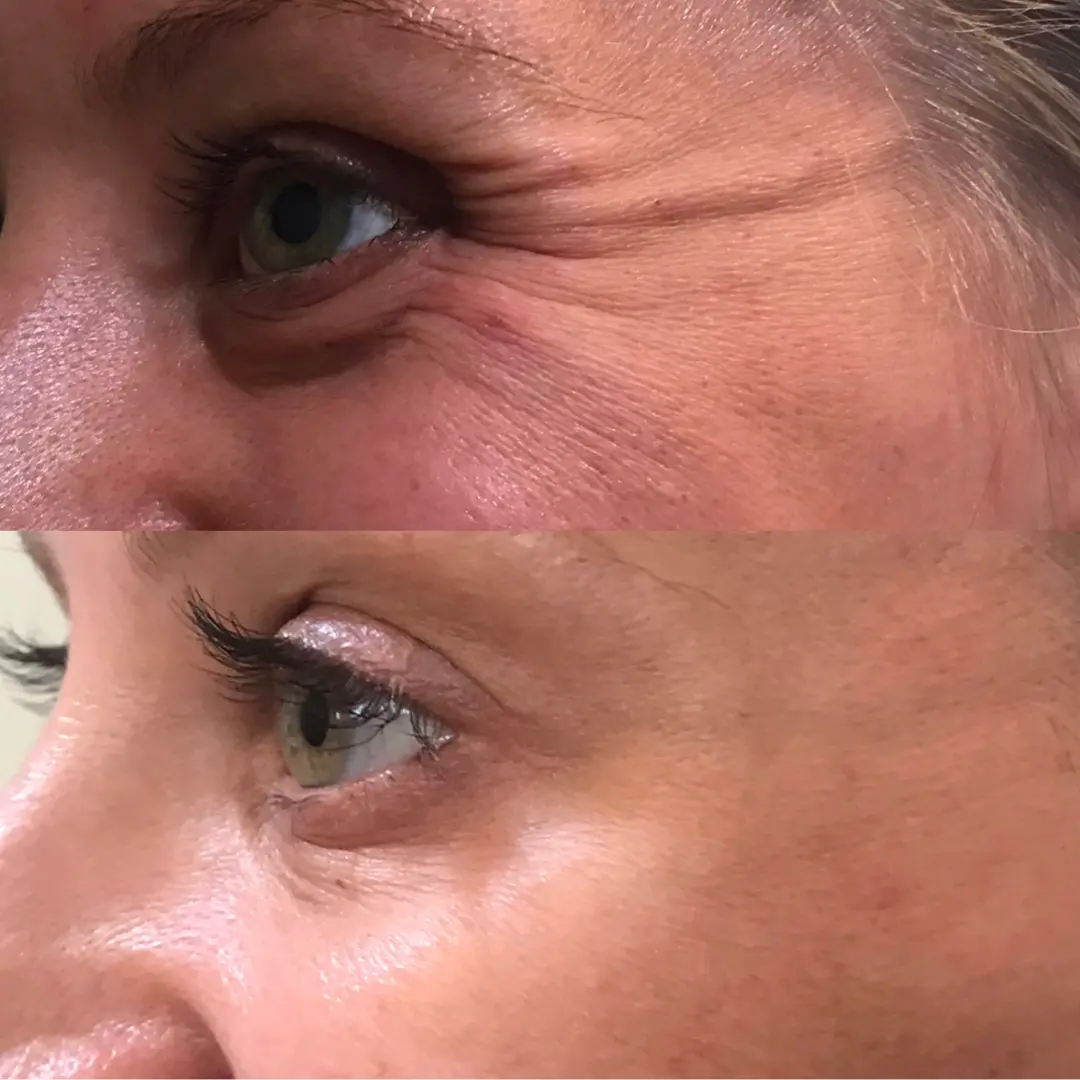
Published data and manufacturer inserts both land in the same neighborhood: three to four months for either product in most treatment areas. Patient experience sometimes tells a more textured story. Some patients consistently report longer duration with Botox, particularly in the glabella and crow’s feet. Others find that Dysport holds its grip on the forehead longer than Botox does for them.
Several head-to-head studies have examined this question, and the results are not unanimous. A well-cited randomized, double-blind trial using a contralateral frontalis model suggested that Dysport produced a longer duration of action in the forehead when dosed at the standard 2.5 to 1 ratio. Other trials have found no clinically meaningful duration difference between the two. The honest answer is that duration varies more by individual biology than by brand, and the only way to know which product lasts longer on you is to try each under the guidance of the same injector.
Diffusion: the single most important technical difference
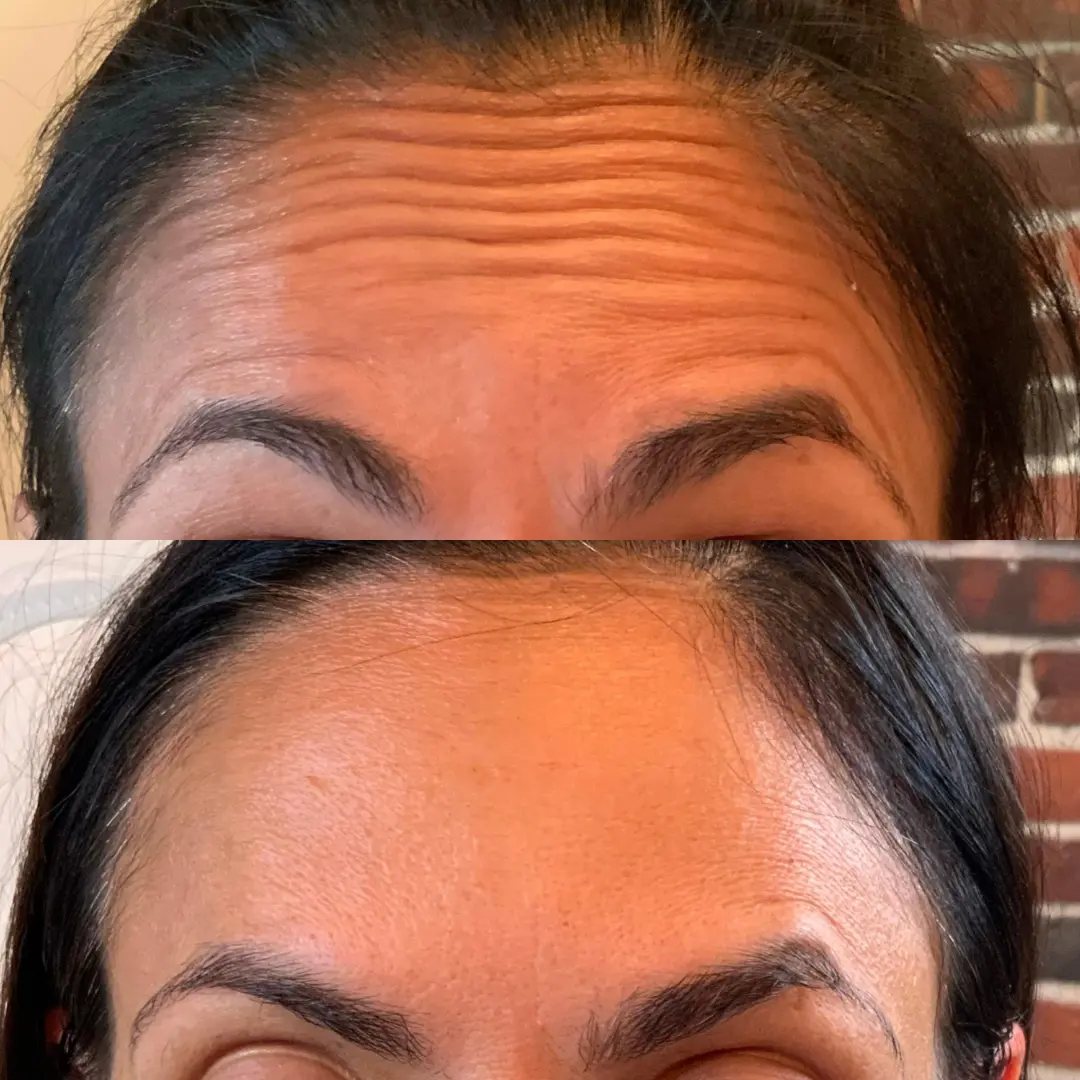
If there is one variable where Botox and Dysport genuinely diverge in everyday practice, it is field of effect. Dysport spreads more generously from each injection point. Botox stays closer to where it lands. Neither behavior is better in the abstract. Each is better for a specific job.
A wide forehead with horizontal lines stretching corner to corner is a natural Dysport canvas. Fewer injection points cover more muscle, and the resulting relaxation tends to blend smoothly across the frontalis without leaving untreated bands. A narrow glabella, a small masseter for jawline slimming, a crow’s foot measured in millimeters, a precise lip flip: these are cases where Botox’s more contained diffusion is an advantage, because a millimeter of unintended spread can lift the wrong part of a brow or soften a smile in a way the patient did not request.
In our practice On a given day at Boutique Wellness, we may reach for Dysport to handle a broad forehead and then switch to Botox for the crow’s feet on the same patient. The two products are not in competition. They are complementary tools for different muscle groups. |
Unit conversion: why the prices look so different
Patients who have been on Botox for years often experience sticker shock when they first see Dysport pricing per unit. The instinct is to assume Dysport is cheaper. The unit is simply defined differently.
Peer-reviewed literature places the conversion ratio at roughly 2.5 to 3 units of Dysport for every 1 unit of Botox. Translated into real treatment plans, a patient who typically receives 20 units of Botox in the glabella will receive somewhere between 50 and 60 units of Dysport for the same clinical result. The per-unit price difference usually disappears once the total dose is calculated. In some cases Dysport ends up marginally more affordable, in others marginally more expensive. The total cost depends on the individual treatment plan, not on the price tag attached to a single unit.
This is also why cross-clinic unit comparisons are unreliable. Fifty units of Botox and fifty units of Dysport are not the same treatment, and any advertisement that invites that comparison is, at best, imprecise.
Who is a strong candidate for each
Candidacy for either product is broadly similar. Adults in good general health, with moderate to severe dynamic wrinkles, who have realistic expectations about what a neuromodulator can accomplish, are typically appropriate for treatment. Within that shared pool, certain patterns emerge.
Botox tends to be the better fit for
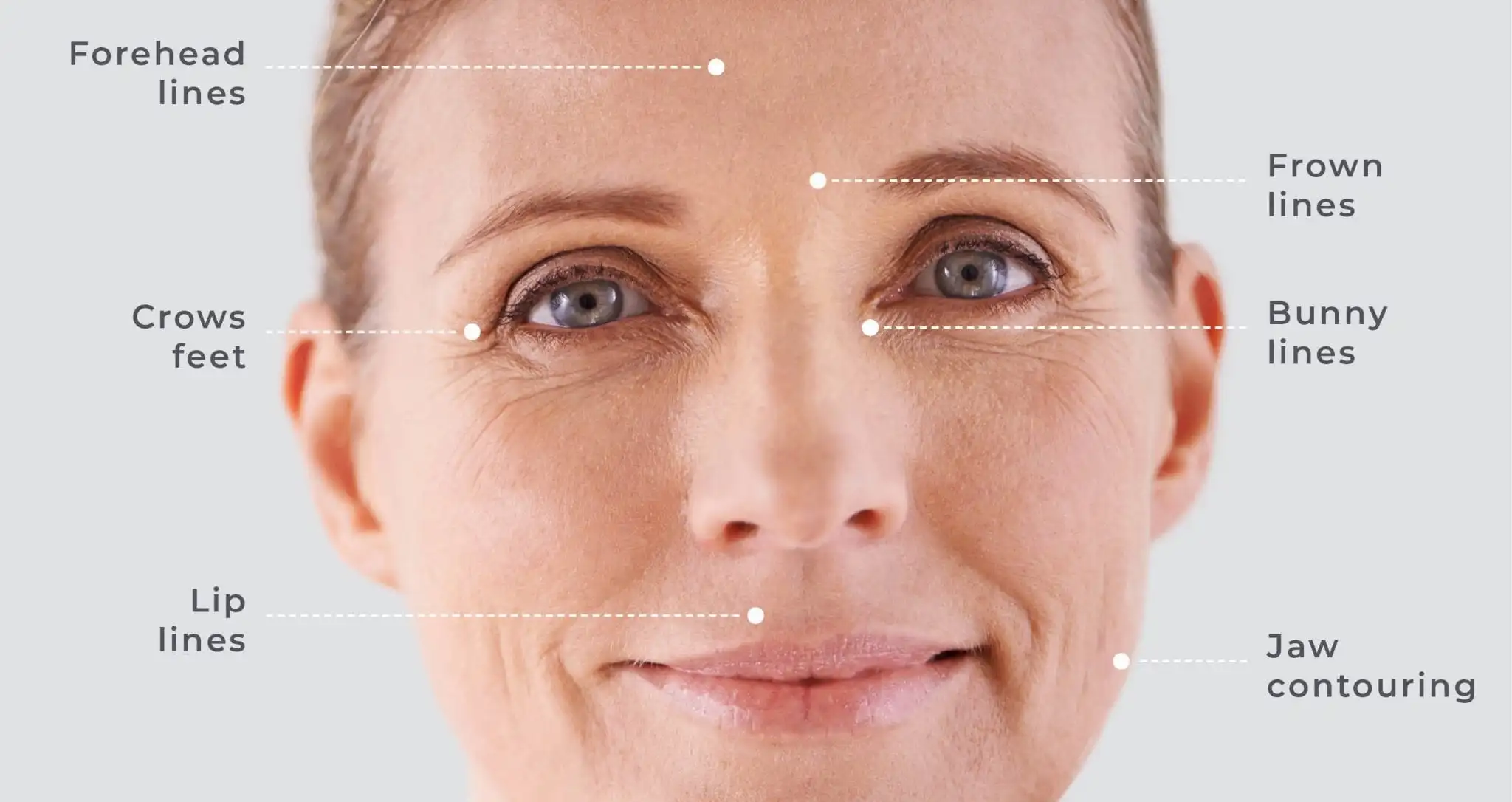
- Patients who value precision over speed, particularly in small muscle groups like the orbicularis oculi (crow’s feet), mentalis (chin dimpling), depressor anguli oris (downturned mouth corners), and the perioral region where lip flips are performed
- Patients undergoing masseter reduction for jawline slimming or bruxism, where contained diffusion protects adjacent smile-related muscles
- Patients with a long history of consistent, predictable Botox results who prefer to keep their routine stable
Dysport tends to be the better fit for
- Patients with broad foreheads or wide glabellar complexes, where Dysport’s diffusion translates into smoother, more even relaxation with fewer injection points
- Patients preparing for a short-notice event who want visible improvement within three or four days
- Patients who have felt that Botox “wore off fast” on the forehead specifically, since some research supports longer frontalis duration with Dysport
Certain medical conditions warrant careful evaluation before either treatment, including myasthenia gravis, Lambert-Eaton syndrome, and ALS, as well as any known allergy to botulinum toxin components. Pregnancy, nursing, and active infection at the injection site are standard exclusions.
Safety: what the long-term data actually says
Both products have strong, well-documented safety profiles. Botox was FDA-approved for therapeutic use in 1989 and for cosmetic use in 2002, giving it the longer track record. Dysport received FDA approval in 2009 after decades of European use, where it has been available since the early 1990s. Serious adverse events from cosmetic dosing are rare for either product. The most common side effects are minor and temporary: injection-site bruising, mild headache, and occasional eyelid or brow ptosis when product migrates beyond the intended muscle.
Ptosis, the unintended drooping of a brow or eyelid, is the side effect most often cited in nightmare Botox stories. It is almost always a function of injection technique rather than product selection. When it occurs it resolves on its own as the product wears off, typically within four to six weeks. The single most reliable way to reduce the risk of any unwanted cosmetic outcome is to choose an experienced injector who understands facial anatomy in three dimensions. Product brand is secondary to that decision by a considerable margin.
The industry truth few clinics say out loud Botox in the hands of an inexperienced injector will produce a result inferior to Dysport in the hands of a skilled one, and the reverse is equally true. The product is a tool. The outcome depends on the clinician holding it. This is the reason your consultation matters more than your brand preference. |
How each fits into a broader plan
Neuromodulators address muscle-driven wrinkles. They do nothing for volume loss, skin texture, pigmentation, or laxity. Patients who see the most dramatic outcomes almost always combine treatment of the underlying muscle with treatment of the surface and the scaffolding beneath it.
In practice, we often pair Botox or Dysport with dermal filler for patients who have lost volume in the cheeks, tear troughs, or lips. For patients whose primary concern is texture, pigmentation, or fine lines that persist even at rest, we look to NOUVADerm laser resurfacing or our proprietary PLADUOpro dual plasma treatment. Laxity and early jowling respond well to PDO threads, which can be sequenced with neuromodulators for a more complete lift.
For patients navigating perimenopause or menopause, the skin changes driven by estrogen decline do not respond to neuromodulators alone. Hormone replacement therapy addresses the underlying driver, and the aesthetic work layers on top. Some of our most loyal patients run Botox or Dysport alongside a broader regenerative medicine protocol, because the best aesthetic outcome is almost always a combination approach rather than a single intervention.
Frequently asked questions
Our guidance, as plainly as we can offer it
If you are new to neuromodulators and undecided between the two, we usually recommend starting with the product best suited to your primary treatment area. A broad forehead and a wide glabella argue for Dysport. A small, expressive face with targeted concerns argues for Botox. Patients preparing for an event within a week may prefer Dysport for its faster onset. Patients with a decade of reliable Botox results rarely need to change course.
More than product selection, the variable that determines your result is the clinician holding the syringe. The difference between a skilled injector and a careless one is visible across the room. Ask how many faces your provider treats each week. Ask to see their own work, not stock photography. Ask whether they customize dose per muscle or apply a fixed template. These questions matter more than the brand on the vial.
Why patients across the Piedmont Triad choose Boutique Wellness
Our team brings decades of combined experience in aesthetics and regenerative medicine to every consultation. We do not apply templates. Every neuromodulator plan at Boutique Wellness is designed around the patient’s anatomy, history, and goals, whether that is the first treatment of a twenty-something who wants to slow the appearance of forehead lines or the refinement of a long-standing Botox routine that has started to feel less personalized than it should.
We serve patients throughout Winston-Salem, Greensboro, High Point, Kernersville, Clemmons, and the surrounding communities. Our clinic is at 848 W 5th Street, Suite 201. If you are considering your first appointment or reconsidering a product you have used for years, the most productive step is a conversation. Schedule a consultation with our team, and we will build a plan around your face.
Ready to refine your result? Book a consultation at Boutique Wellness in Winston-Salem and let us help you decide whether Botox, Dysport, or a combination is the right answer for your face. Call 336-530-5612 or request an appointment online. |